All Pest Control · LONDON
How And Why Do Rats Enter Your Kitchen
Al JoelAl Joel is a practical writer and long-term property maintenance specialist focused on real-world pest control, home safety and prevention advice. His guides translate common warning signs into clear next steps for homeowners, tenants, landlords and property…
How and Why Do Rats Enter Your Kitchen
Love them or hate them, rats are a serious health risk. They carry bacteria and diseases that can affect humans directly or indirectly through pets, contaminated surfaces, and food. Rat urine and droppings can spread illness, and bites can introduce bacteria that put real strain on the immune system. This is why preventing rats from entering your kitchen is not just about hygiene, but about protecting your home and health.
Once you understand how rats get into kitchens and what attracts them, it becomes much easier to stop the problem before it turns into a full infestation.
How Do Rats Enter Your Property?
Rats are far more capable than most people realise. If there are rats in your garden or nearby, some will enter simply through open doors or windows, especially at night. Others find their way in through structural weaknesses that often go unnoticed.
Common entry points include damaged air bricks, broken wall vents, gaps around pipes, and faulty drains. Roof access is also common, particularly in properties with extensions where small gaps can form between walls and ceilings. Once a rat finds a way in, it will keep using the same route.
Typical access points include windows and doors left open, gaps or holes in floors and walls, spaces under doors, cat or dog flaps, drains and waste pipes, holes in the roof, and poorly protected air vents. Even small gaps are enough, as rats can compress their bodies and squeeze through surprisingly tight spaces.
Why Do Rats Target the Kitchen?
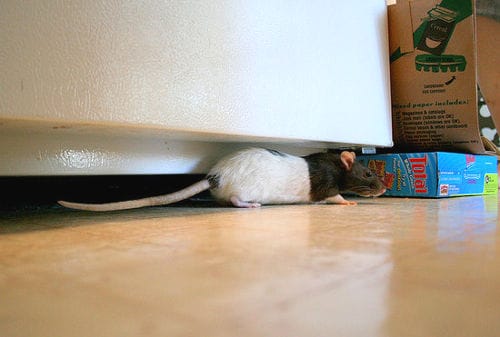
Rats don’t enter kitchens by accident. They go where food, water, and shelter are easy to find, and the kitchen offers all three. The space under kitchen units is especially appealing, as rats can move and nest there without being seen.
Food left out overnight is one of the biggest attractions. Rats will take uncovered food from worktops, tables, or bins and carry it back to their nesting area to hoard. If they remain undetected, they can live and breed close to or even inside the kitchen space.
They can also chew through cardboard, plastic, and thin packaging, making pantries and cupboards easy targets. Flour, cereal, biscuits, pet food, and even soap residues can attract them.
Other things that commonly lure rats into kitchens include food left on counters or tables, leaky taps or pipes that provide water, open or overflowing bins, pet food and water bowls, and cluttered areas behind appliances where rats feel safe.
Why Rats in the Kitchen Are Dangerous
Rats are not just unpleasant to have around. They pose real risks. They can contaminate food and surfaces with urine and droppings, chew electrical cables causing power failures or fire hazards, and damage pipes, walls, floorboards, and insulation. The longer they stay, the more expensive and dangerous the problem becomes.
Because rats reproduce quickly, what starts as a single intruder can turn into a colony in a very short time.
How to Prevent Rats from Entering Your Kitchen
Prevention starts with removing what rats need to survive. They rely on a steady supply of food and water, so eliminating easy access makes a big difference.
Make sure there are no dripping taps or leaking pipes. Always cover or store food properly and avoid leaving leftovers out overnight. Empty bins regularly and use bins with tight-fitting lids. Pull out washing machines, dishwashers, and cookers from time to time to clean and inspect behind them. Check skirting boards and flooring for gaps or damage and seal any holes you find.
Pay close attention to areas where sink waste pipes pass through walls, as even small gaps can allow rats to travel through wall cavities and into the kitchen. If your property has old or unused sewer connections, these should also be inspected. In some cases, damaged floorboards may need replacing to fully block access.
Some homeowners try natural deterrents such as garlic or hot peppers, but these are rarely reliable on their own and should only be seen as a temporary measure.
How to Deal With a Rat Problem
Once rats have entered your kitchen, the priority is to remove them safely and prevent them from coming back. Traps and DIY methods may help in very minor cases, but they rarely solve the root of the problem. Without proper sealing and inspection, new rats will simply replace the old ones.
If the infestation feels overwhelming or keeps returning, professional help is the safest option. Panther Pest Control provides reliable, accredited rat control carried out by trained technicians. Your health and safety are taken seriously, and treatments are designed to eliminate the infestation fully while preventing future access.
You’ll receive clear advice, practical solutions, and a cost-effective service that gives real peace of mind, knowing the rat problem has been dealt with properly.
More Blog Posts:
- Pantry Pests in UK Homes: How to Find and Remove Stored Food Insects
- Pest Control in Rented Property: Landlord or Tenant Responsibility in the UK?
- Signs of Woodworm in UK Homes: Identification, Treatment and Prevention
- How to Get Rid of a Wasp Nest Safely: UK and London Expert Guide
- Rats in the Garden UK: How to Remove Them Safely and Stop Them Returning

Al Joel is a practical writer and long-term property maintenance specialist focused on real-world pest control, home safety and prevention advice. His guides translate common warning signs into clear next steps for homeowners, tenants, landlords and property managers.
His approach begins with correct identification. A sighting in one room may originate from a neighbouring flat, service riser, drainage, roof space, delivery or communal waste area. Al explains how to preserve useful evidence, reduce food and water sources, avoid spreading activity and choose proportionate treatment.
What readers can expect
- Clear identification clues and practical inspection steps
- Safe preparation, cleaning and aftercare guidance
- Prevention advice for homes, flats and commercial premises
- Honest guidance on when DIY is reasonable and when professional help is the smarter option
When professional help makes sense
Repeated sightings, activity in several rooms, uncertain identification, vulnerable occupants or signs involving food, electrics and shared building routes deserve a professional inspection. A lasting solution normally combines targeted treatment with proofing, hygiene and follow-up monitoring.
Explore the Pest Library, learn how treatment works, or request property-specific advice.